Hollyland Pyro H Review: Wireless 4K Video Transmission Tested
Reliable 4K wireless monitoring on set with the Hollyland Pyro H. Read our review on range, 60ms latency, dual-band streaming, and multi-receiver setups.
 Video Transmission
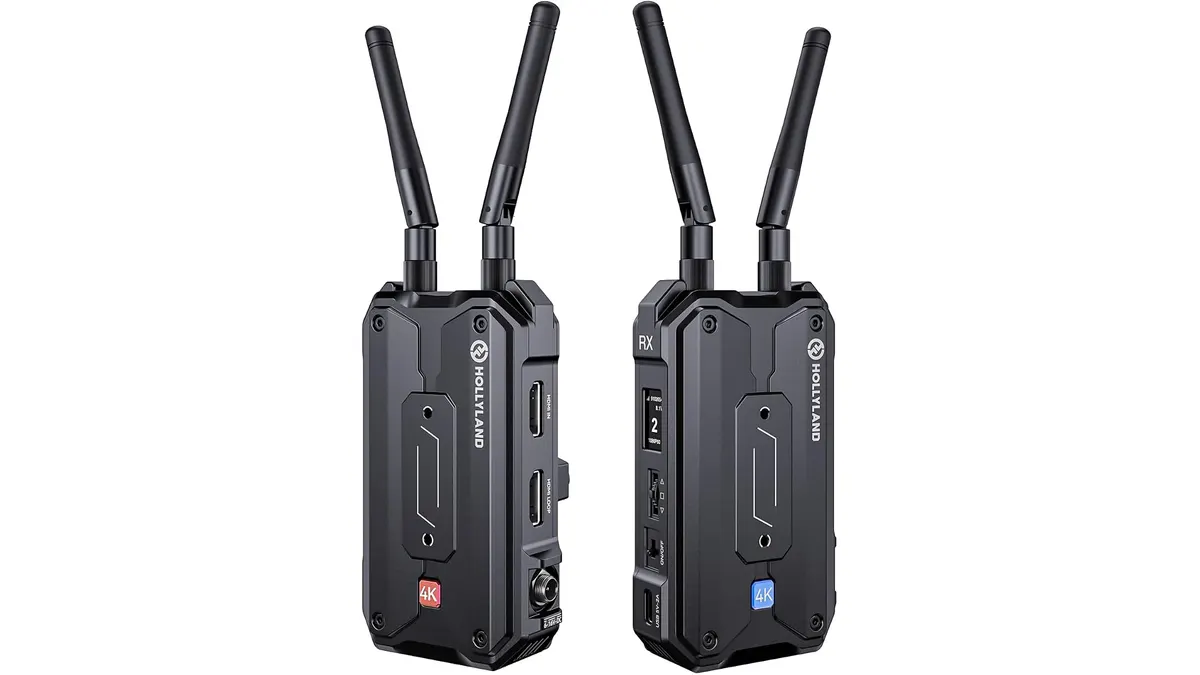
Maintaining crisp, reliable wireless video feeds for directors, clients, and focus pullers is essential on modern production sets. Reliable video transmission gear keeps crew members aligned without cluttering the set with extra cables. The HollyView Video Transmission system, specifically the Hollyland Pyro H, enters this competitive space offering 4K monitoring, dual-band signal stability, and multi-receiver support. I tested this unit across demanding real-world shooting scenarios to see how well its line-of-sight range and low-latency performance hold up.
What it does well
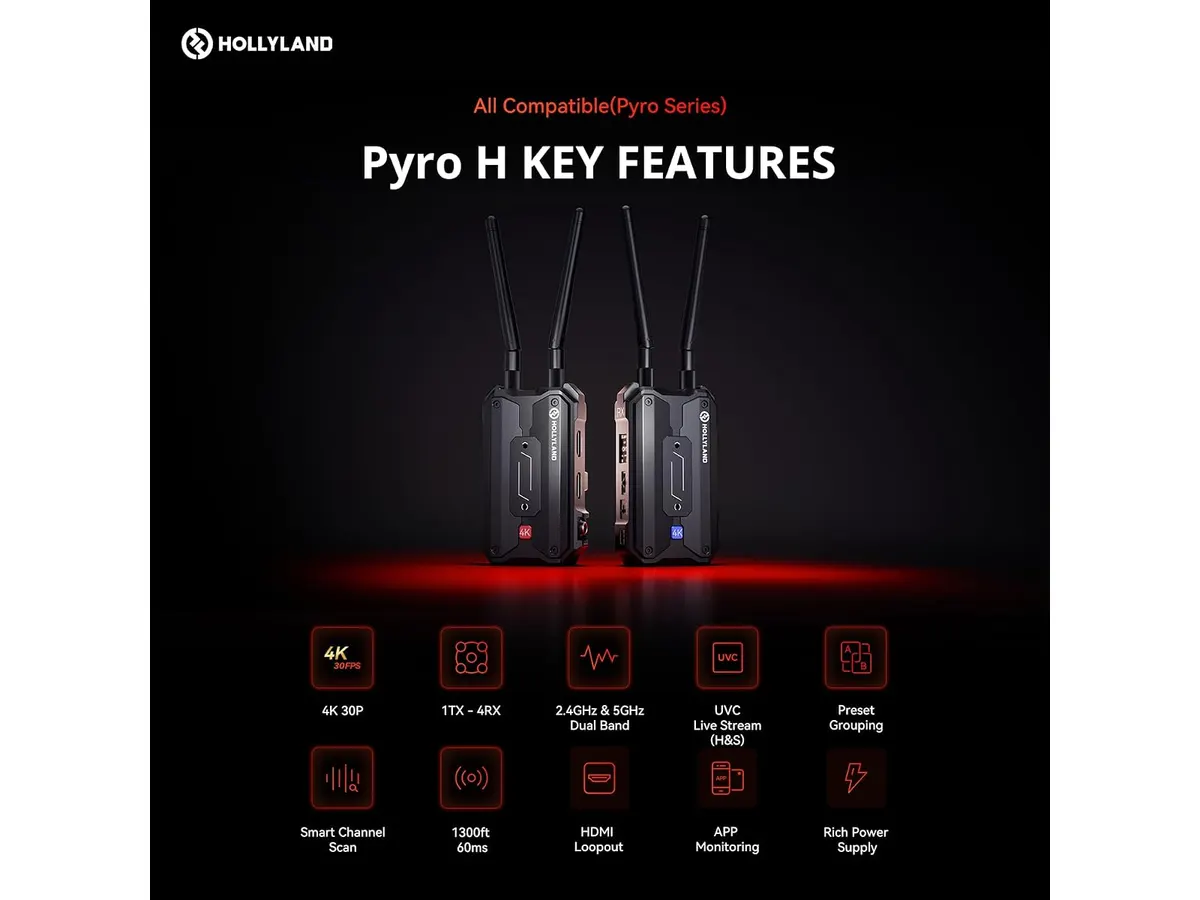
Wireless video setups often fail when RF interference spikes on location, but the Pyro H handles crowded spectrums with impressive stability. Equipped with dual-band 2.4 GHz and 5 GHz frequency support, the unit features smart frequency scanning that automatically analyzes your environment and locks onto the clearest available channel. During a corporate shoot in a high-density office building packed with Wi-Fi routers and Bluetooth devices, the automatic channel switching kept our monitoring clean and uninterrupted.
Image clarity is another strong suit. Delivering 4K resolution at 30 frames per second over HDMI, the feed provides sharp focus assistance and detailed playback for clients monitoring live takes. On set, being able to evaluate fine details—such as eye focus on a wide frame or precise prop placement—saves crucial minutes during tight shooting schedules.
Latency management on this device is tuned well for real-time monitoring. Operating at a 60ms transmission delay, the visual response feels nearly instantaneous for framing adjustments, camera movement on gimbals, and secondary monitoring. While extreme high-speed action focus pulling might still favor physical cabling, 60ms provides a smooth experience for focus pullers, script supervisors, and directors.
Flexibility in crew distribution is where this kit stands out. The hardware supports up to 4 receivers simultaneously, allowing a single camera transmitter to broadcast feeds to the director’s village, focus puller, client monitor, and video playback operator at the same time. Additionally, the integrated UVC (USB Video Class) connectivity allows direct plug-and-play live streaming into a laptop without requiring an external capture card, making it instantly useful for hybrid event coverage.
Key specifications
| Feature | Specification |
|---|---|
| Maximum Video Resolution | 4K at 30fps |
| Transmission Range | Up to 400 meters (line-of-sight) |
| Latency | 60ms |
| Frequency Bands | Dual-band (2.4 GHz and 5 GHz) |
| Receiver Capacity | Up to 4 receivers simultaneously |
| Connectivity | HDMI, UVC (USB Plug-and-Play) |
| Spectrum Management | Smart automatic frequency scanning |
Where it falls short
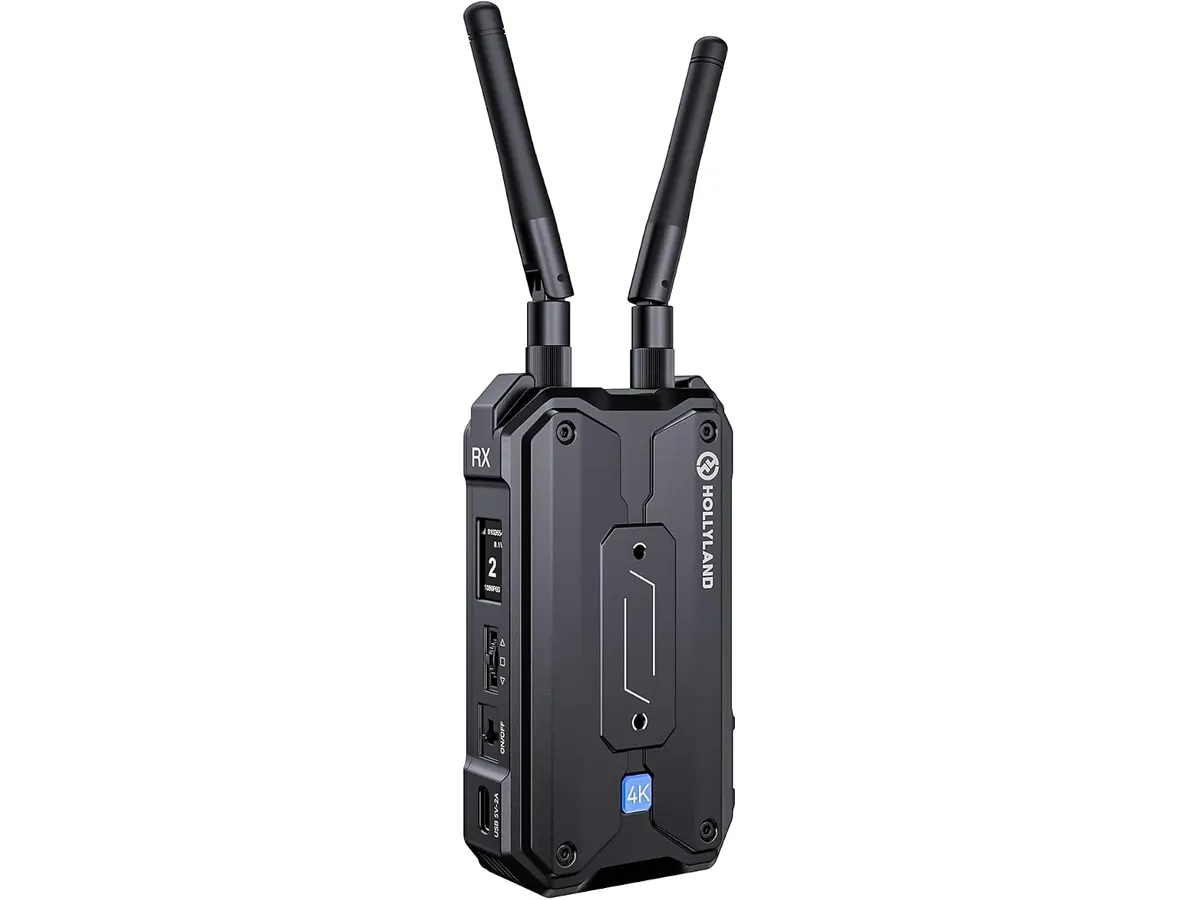
While the overall performance is robust, there are clear trade-offs depending on your camera rig. The most notable limitation is the connectivity layout: the system relies strictly on HDMI and UVC. If you operate broadcast hardware or cinema cameras that strictly rely on SDI input and output, you will need to incorporate active converters onto your rig, adding unwanted points of failure and weight.
Resolution ceiling is another practical boundary. While 4K at 30fps covers the standard delivery specs for most commercial productions, filmmakers shooting high-frame-rate 4K content (such as 4K 60fps or 120fps) must set their camera’s HDMI output down to 30fps or 1080p to feed the transmitter.
Finally, while the 400-meter line-of-sight range is generous on open fields or outdoors, physical structures significantly reduce this reach. Passing through thick concrete walls or dense steel structures on interior locations causes the effective range to drop, requiring strategic positioning of the receiver units.
Who is it for?
This transmitter fits perfectly into the workflow of independent filmmakers, commercial production teams, and corporate videographers. If you regularly run multi-person crews where a director, focus puller, and client all need clean 4K monitoring without running HDMI cables across the floor, the Pyro H simplifies set organization. It is also an exceptional choice for live event streamers who want to output a camera signal wirelessly and feed it straight into a laptop via UVC.
It is not designed for high-end cinema units or broadcast trucks that require BNC/SDI connections, genlock synchronization, or zero-latency (under 1ms) uncompressed transmission. Large-scale broadcast productions relying on SDI infrastructure will find the HDMI-only workflow restrictive.
Alternatives to consider
If you operate primarily on smaller budget projects and need basic wireless monitoring without high-resolution demands, entry-level wireless transmitters might be sufficient. These entry-tier models lower costs by offering 1080p transmission and limiting connection counts to one or two mobile devices. You can read our Jakoly Image Transmission 2-Pack Review for Filmmakers for an example of portable monitoring solutions, or check out our guide on simplified conference video transmission for fixed meeting room setups.
For studios that focus heavily on installed pan-tilt-zoom cameras and static multi-room streaming rather than mobile rig transmitters, dedicated studio video encoders offer structured fixed-location routing. To compare fixed broadcast hardware with mobile wireless transmitters, check our Tenveo VX30M-Ultra review.
Verdict
Our hands-on Hollyland Pyro H review shows that HollyView delivered a dependable, highly versatile unit for modern video crews. The combination of 4K 30fps clarity, 400-meter range, 60ms latency, and 4-receiver broadcasting makes wireless monitoring hassle-free on commercial sets. Although the lack of SDI connections limits its use on high-end cinema rigs, its rock-solid dual-band stability and UVC streaming make it a top-tier investment for growing production teams upgrading their video transmission kit.
Frequently asked questions
How many receivers can connect to the Hollyland Pyro H at once?
The Hollyland Pyro H can transmit video signals to up to 4 receivers simultaneously from a single transmitter, allowing multiple team members to monitor footage at the same time.
Can I plug the Hollyland Pyro H directly into a computer for live streaming?
Yes, the transmitter features UVC (USB Video Class) support, allowing you to connect it directly to a computer via USB for plug-and-play streaming in applications like OBS or video conferencing software.
Does the Hollyland Pyro H automatically switch frequencies to prevent lag?
Yes, the unit features smart frequency scanning across both 2.4 GHz and 5 GHz dual-band spectrums, automatically selecting the clearest channel to avoid interference on set.

Written by
Charly River
Editor & Head of Reviews
I review audiovisual gear by cross-checking official specs, real availability and value for money. No sponsorships: if a link earns a commission, I always say so.
Spotted an error? Email usYou may also like
 Video Transmission
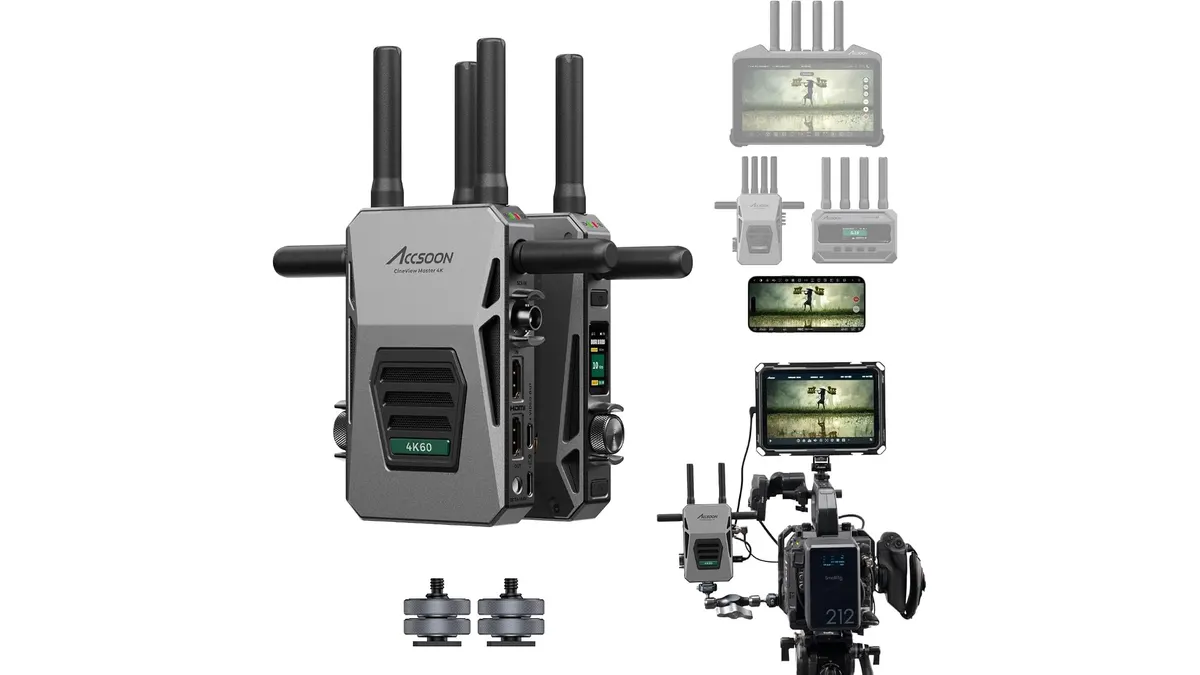
Accsoon CineView Master 4K Lite Review: Field-Tested Performance
Our hands-on Accsoon CineView Master 4K Lite review covers 4K60 transmission, dual-band stability, 350m range, latency, and real-world production performance.
 Video Transmission
Hollyland Pyro Ultra Review: 4K60 Long-Range Video
Our in-depth Hollyland Pyro Ultra review tests its 4K60 video transmission, 4,900 ft range, SDI/HDMI connectivity, and low-latency Focus Mode.
 Video Transmission
Hollyland Mars 4K Review: Reliable Wireless Video Transmission
Discover the Hollyland Mars 4K for seamless video transmission. Explore its strengths, limitations, and whether it's the right choice for your projects.